
Our story
- Models vanish (Fable just did)
- APIs change
- Costs drift
- Production still has to survive it all
AI had its superpower moment… For a while, that was the whole story. A model could write, code, search, and summarize, and still feel like magic ✨
Then the real product question showed up:
- Can the system repeat that value tomorrow?
- Can we see what changed?
- Can we control cost?
- Can we retire a model without breaking the product?
The magic fades fast when the answer is “no.” That gap is where design-first AI thinking begins.
The moment
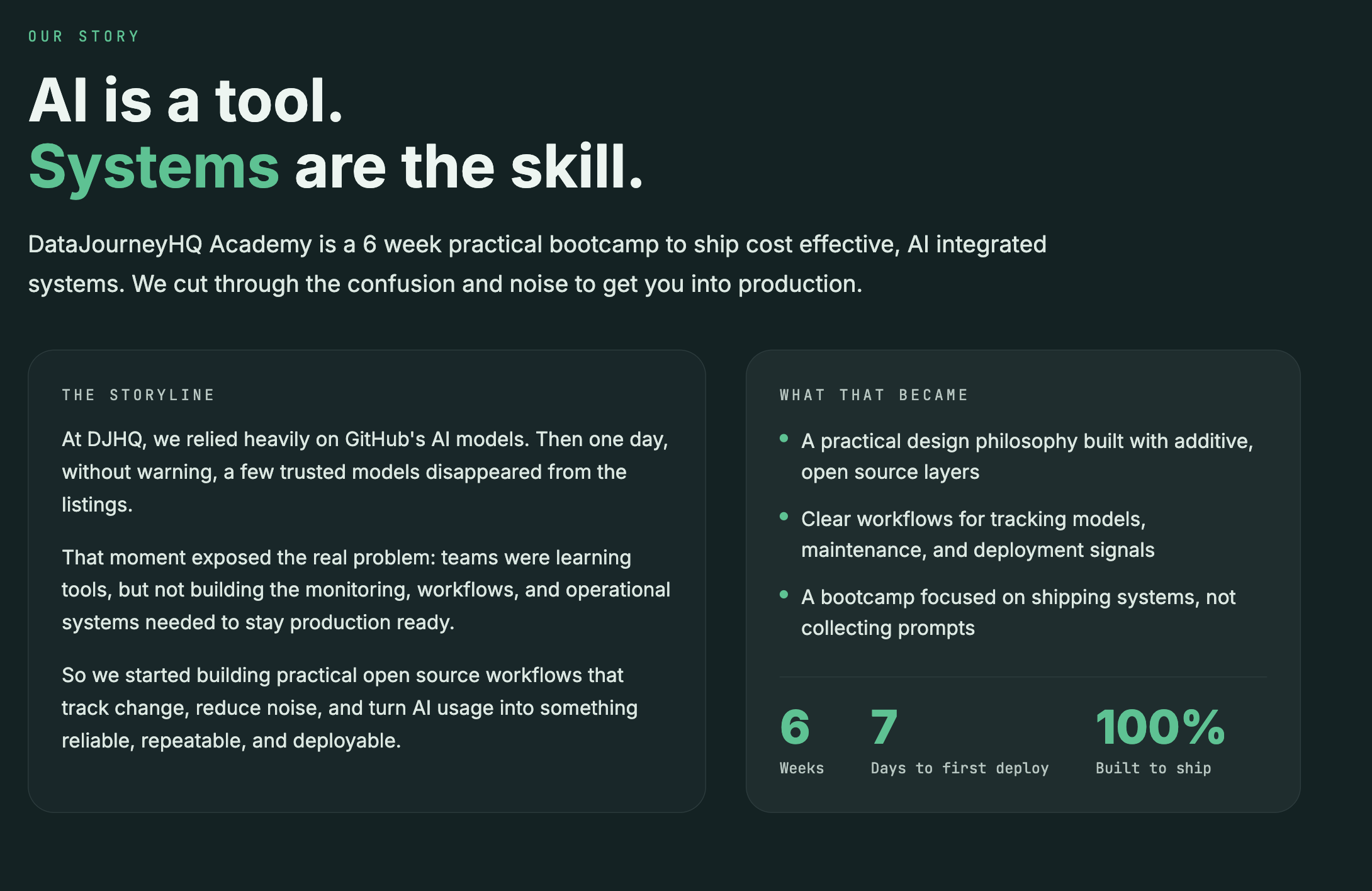
At DJHQ, we relied heavily on GitHub’s AI models. Then one day, without warning, a few trusted models disappeared from the listings.
That was a good wake-up call.
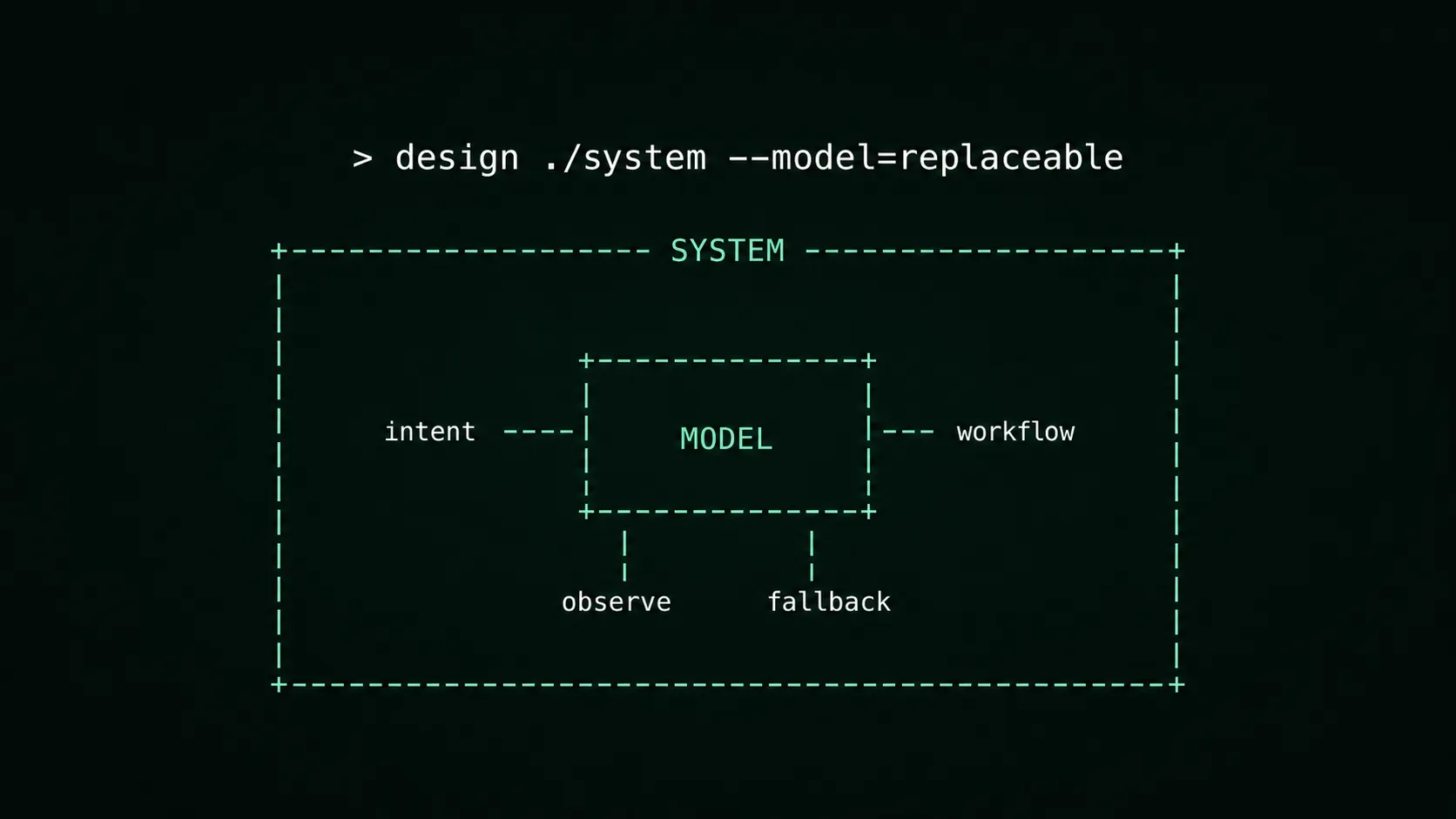
- Track the layer around the model
- Design for change
- Build monitoring before panic strikes
- Treat deprecation as a product event
The model was never the product; the system around it is.
What design-first means
Design-first AI is not decoration. It is the taste profile and the main ingredient.
Before we pick the model, we ask:
- Why is intelligence needed here?
- Does it improve accuracy?
- Does it reduce time to market?
- Does it create speed to value for the customer?
If the answer is weak, we do not force AI into the product.
Sometimes the better answer is:
- A clearer workflow
- A rules engine
- A better data model
- NO AI at all
The design choices people miss
In our world of AI, small choices turn expensive quickly.
Healthy design choices:
- Observability
- Model Drift monitoring
- Parameter tracking
- Fallback behavior
- Approval before action
- Deprecation paths
The “use first, think later” habit bites fast here.
With AI, the messy edge becomes behavior.
The DataJourney way
DataJourneyHQ came from this belief:
AI can be powerful, but it is still a tool. The real skill is building systems that survive when the tool changes.
So our work is focused on:
- Practical open source layers
- Workflows that track model change
- Maintenance signals before breakage
- Cost-effective AI integration
- Production habits, not prompt collecting
The model will change. The system you build around it is what lasts.
If you are building AI that has to survive model churn, start where we did: DataJourney Academy is built around shipping systems, not chasing models.