
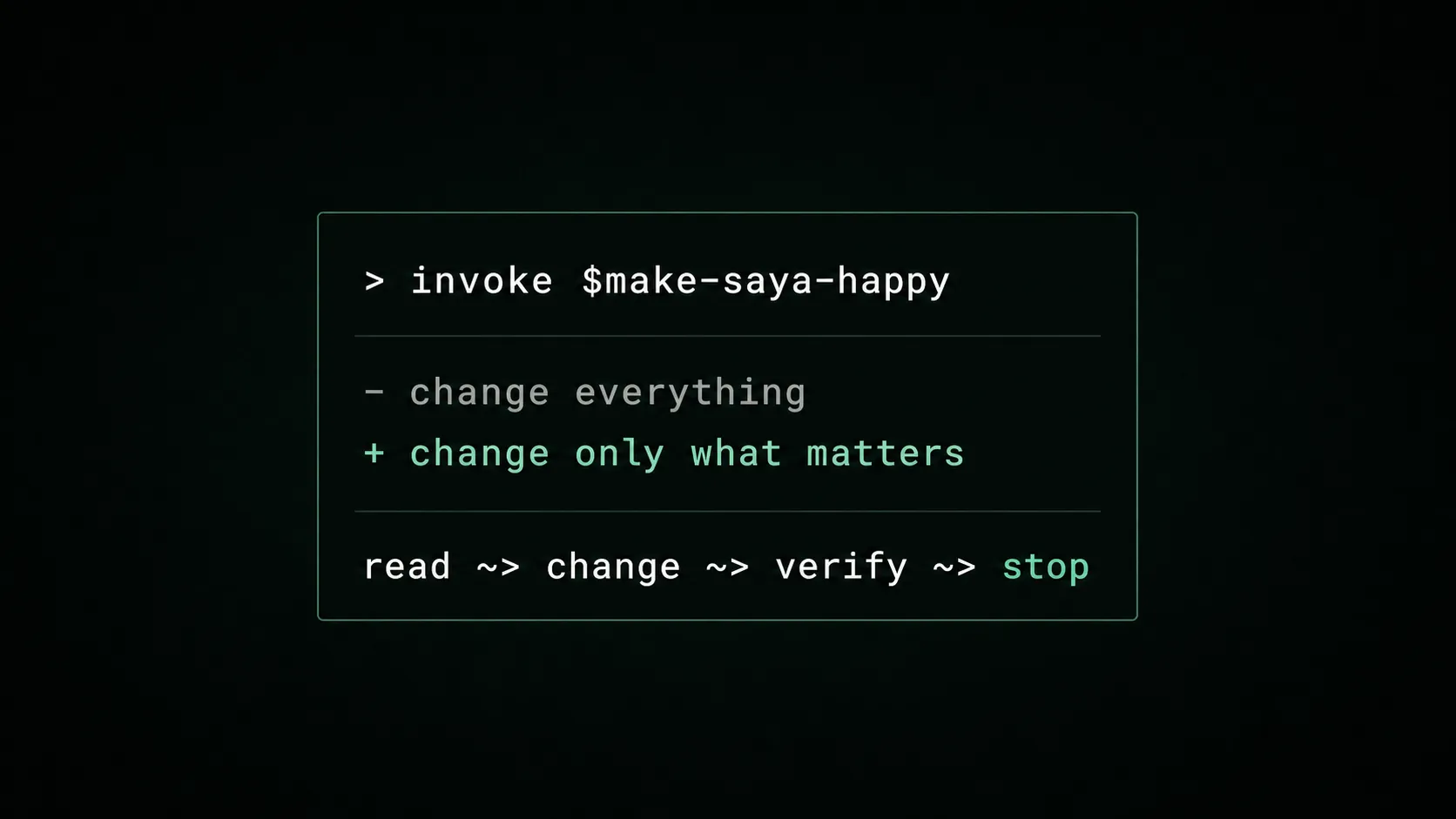
I made a Codex skill called $make-saya-happy. The name is playful, but the reason is practical: LLMs are good at doing more yet they are not naturally good at making one small change and knowing when to stop.

The problem is not intelligence
- Scope grows because a request to fix one thing can reveal five more things worth changing.
- Extra work appears as nearby helpers get refactored and new abstractions slip into the diff.
- Review gets harder because every addition creates more code to understand and more behaviour to trust.
This is not a problem of intelligence. LLMs are built to continue while surgical work depends on restraint. The model wants to keep going but the edit needs to know when it is done.
What the skill changes
The skill gives Codex a simple working posture:
- Read the codebase first and follow its language
- Reuse what is already there and protect work outside the task
- Build the smallest complete solution and verify that it works
- Reduce absurd token costs
- Care about the finished experience so the interface feels native
This is not about making the model timid. It is about giving it taste and boundaries while making the definition of done clear.
The best result can look almost boring: one focused diff with one relevant check and no hidden cleanup.
That is what $make-saya-happy is for. It helps Codex do less on purpose and finish the right job well.
In surgical work, restraint is not a limitation -> It is the skill!