
The Human Side of Technical Change extended the questions raised in When Software Stops Feeling Handmade into value, accountability, and the cost of keeping up.
One tension connected almost every perspective shared on the call:
AI can compress the time it takes to do technical work. It cannot tell us whether that work mattered.
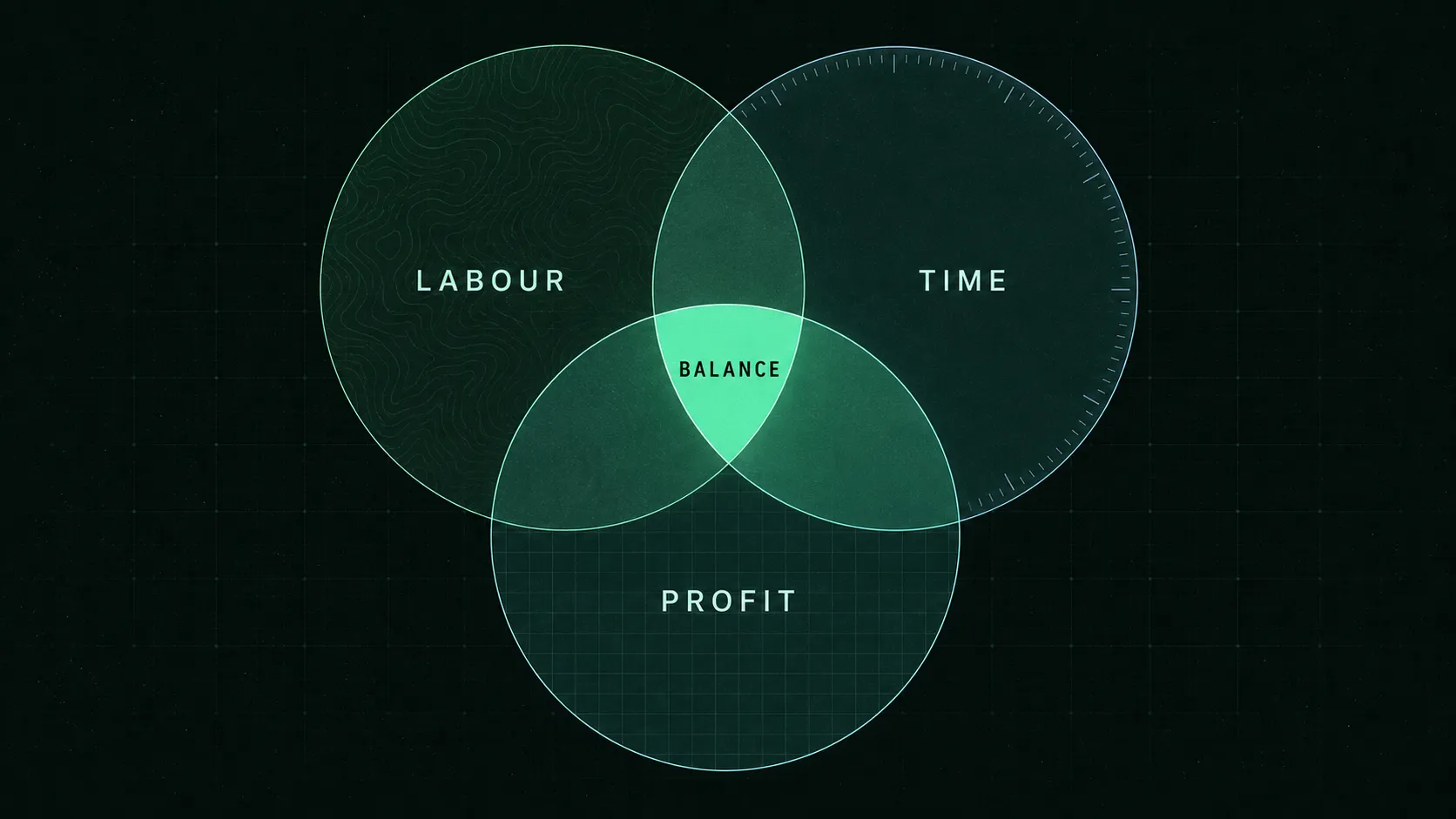
The group pictured labour, time, and profit as three overlapping circles. AI can shrink the time circle dramatically, but that does not guarantee more profit or remove the labour behind a dependable result.
Time saved is real. It is not the same as value created.
One participant described the tension inside a large organization: teams are expected to ship faster with AI, while accountability remains unclear. When an AI-assisted change fails, the model cannot explain the incident, rebuild trust, or carry professional consequences. Those still land on people.
Model choice adds financial and mental cost. Pricing shifts and deprecations create testing, migrations, and interrupted roadmaps. A deprecation notice is also a business event.
A better balance
System design can hold the line through replaceable model layers, evaluation baselines, observability, fallbacks, and clear ownership.
AI accelerates execution. People provide intent and judgment. Organizations own incentives and consequences. Systems preserve evidence and make decisions reversible.
The balance breaks when a tool is asked to carry judgment, an individual is asked to carry an organizational failure, or speed is asked to stand in for value.