
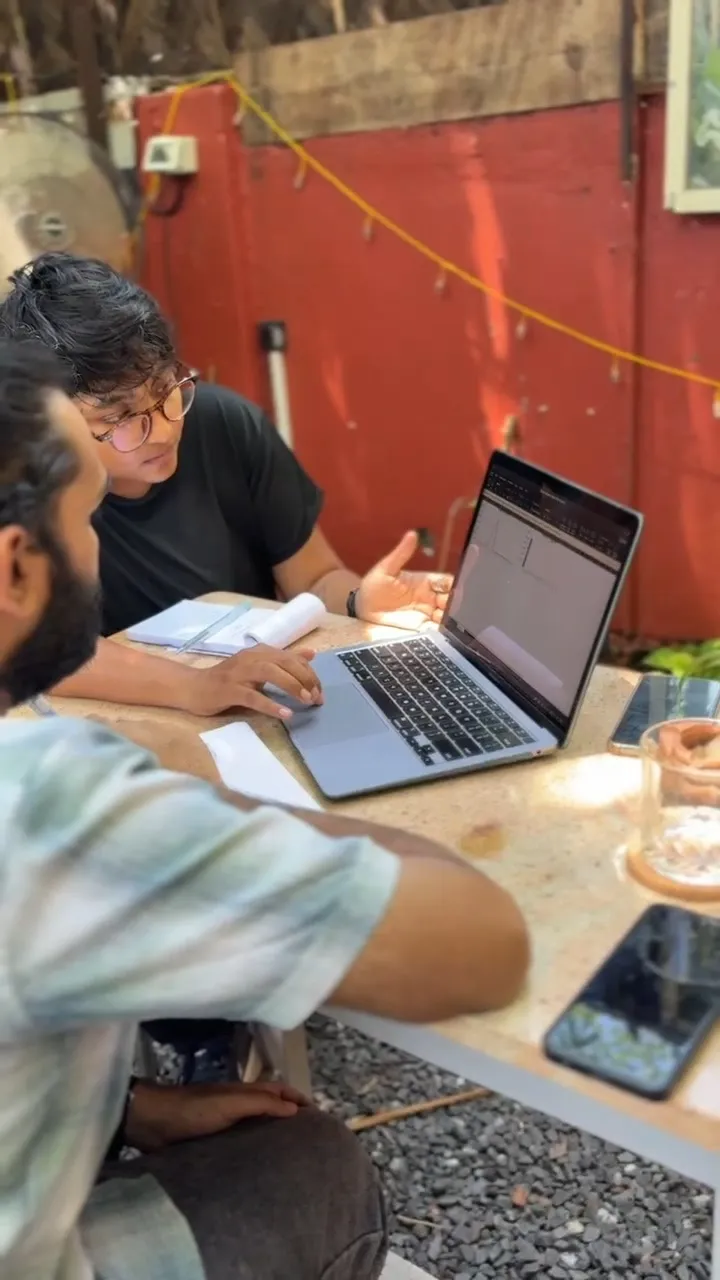
I walked into Ruby’s with a book and left thinking about receipts.
As we talked about the cafe, a recurring frustration surfaced: supplier bills arrived in different formats, GST details could not be guessed, and every entry still had to be right. The work was repetitive, but the cost of getting it wrong was real.
The useful question was not Where can we add AI? It was How can we make this work easier without hiding uncertainty?
I knew I could help. Bill se Khata began with that problem.
Translation comes before technology
AI products arrive with their own vocabulary: models, agents, prompts, context windows, and confidence scores. A cafe runs on ingredients, supplier relationships, cash flow, bills, GST, and books that have to add up.
A cafe owner should not have to cross that gap. The product should.
Here, the translation was concrete:
- A receipt photo becomes a purchase record
- A pile of bills becomes one Excel ledger
- Printed tax becomes a GST summary
- An unclear field becomes a specific review task
- A repeated bill becomes a duplicate signal
The model was not the product. That translation was.
Build around the existing work
That insight became Bill se Khata, an OpenAI plugin built around a familiar workflow. A cafe owner or team member photographs the receipt. The plugin turns it into an itemised Excel purchase ledger and adds each new bill to the same workbook.
The ledger captures visible GST, reconciles totals, tracks vendors, and surfaces uncertain details instead of inventing what the receipt does not show.
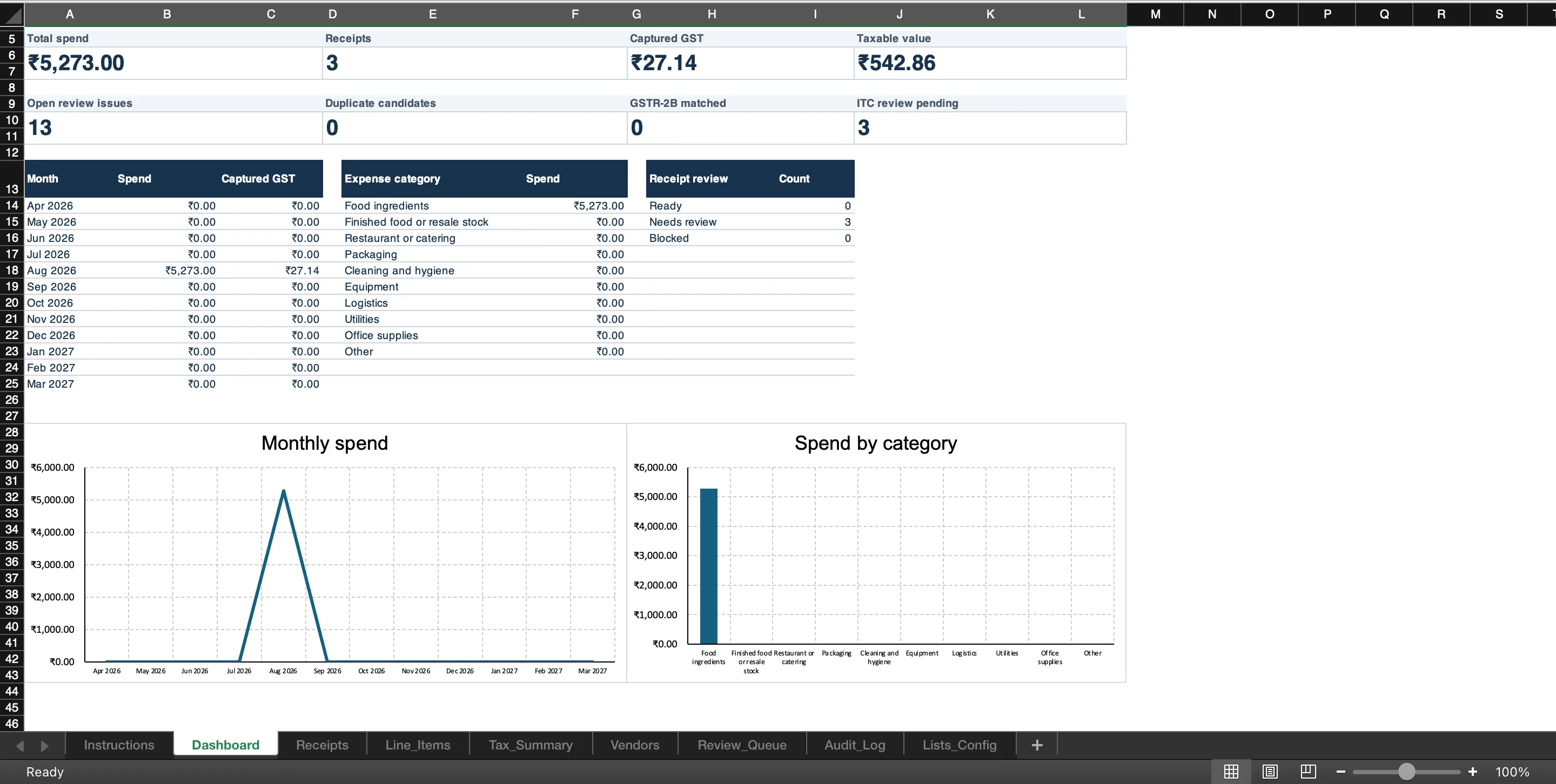
The first workbook held three receipts, ₹5,273 in total spend, and ₹27.14 in captured GST. It also showed 13 open review issues. That was not a failure. It was a sign that the system knew when to ask for help.
Trust lives in the review queue
Extraction is useful only when the result is safe to act on. A supplier name may be missing, a handwritten quantity may be hard to read, or a GST detail may need confirmation. Instead of smoothing over those gaps, Bill se Khata records the issue, explains why it needs attention, and suggests the next action.
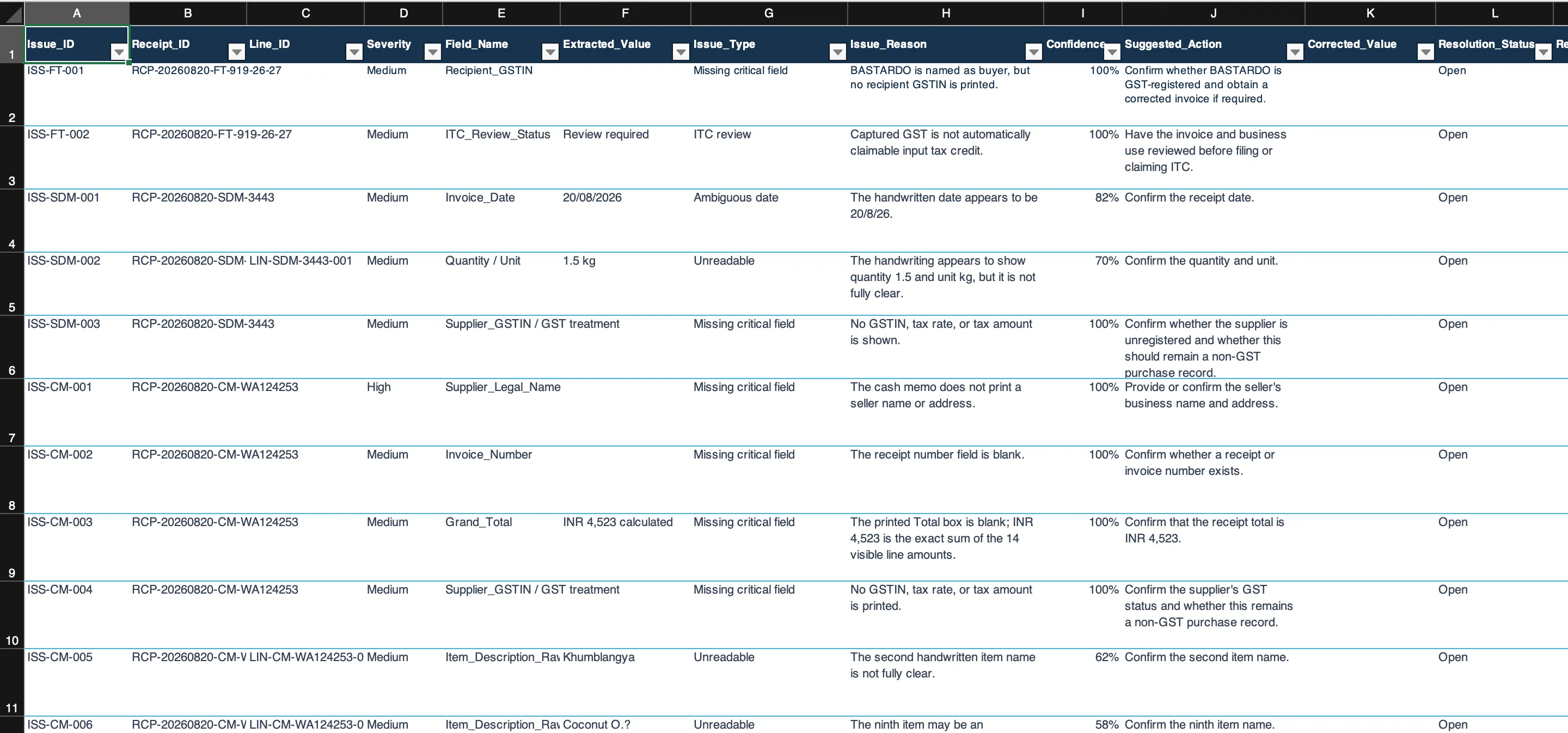
The AI handles the repetitive reading. A person keeps control of the accounting decision. That division of work is what makes the tool credible.
Handover is part of the product
The real test was whether the cafe team and builders could use it without me. The workflow had to be clear in three moves:
- Take a clear photo of the bill
- Ask Bill se Khata to create or update the ledger
- Review the fields it has flagged
Training focused on judgment, not prompts: when to trust the output, when to compare it with the original bill, and how to correct a flagged field.
When the question changed from Which model is this? to Can the next bill go into the same sheet?, the tool had crossed from demo to workflow.
You can open Bill se Khata in ChatGPT and try the same receipt-to-ledger workflow.
What I took away
Helping small and medium-sized businesses use AI does not begin with a technology pitch. It begins with one piece of work people want to do better.
For a cafe owner, the value is not that a model can read a receipt. It is a cleaner ledger, less manual entry, clear follow-up, and a process the team can repeat without losing control.
Useful AI should feel less like technology arriving and more like friction lifting, while control stays with the people doing the work.